

Choosing the Right Concrete Mix for High-Temperature Conditions
June 4, 2026
How Heat Changes the Mix
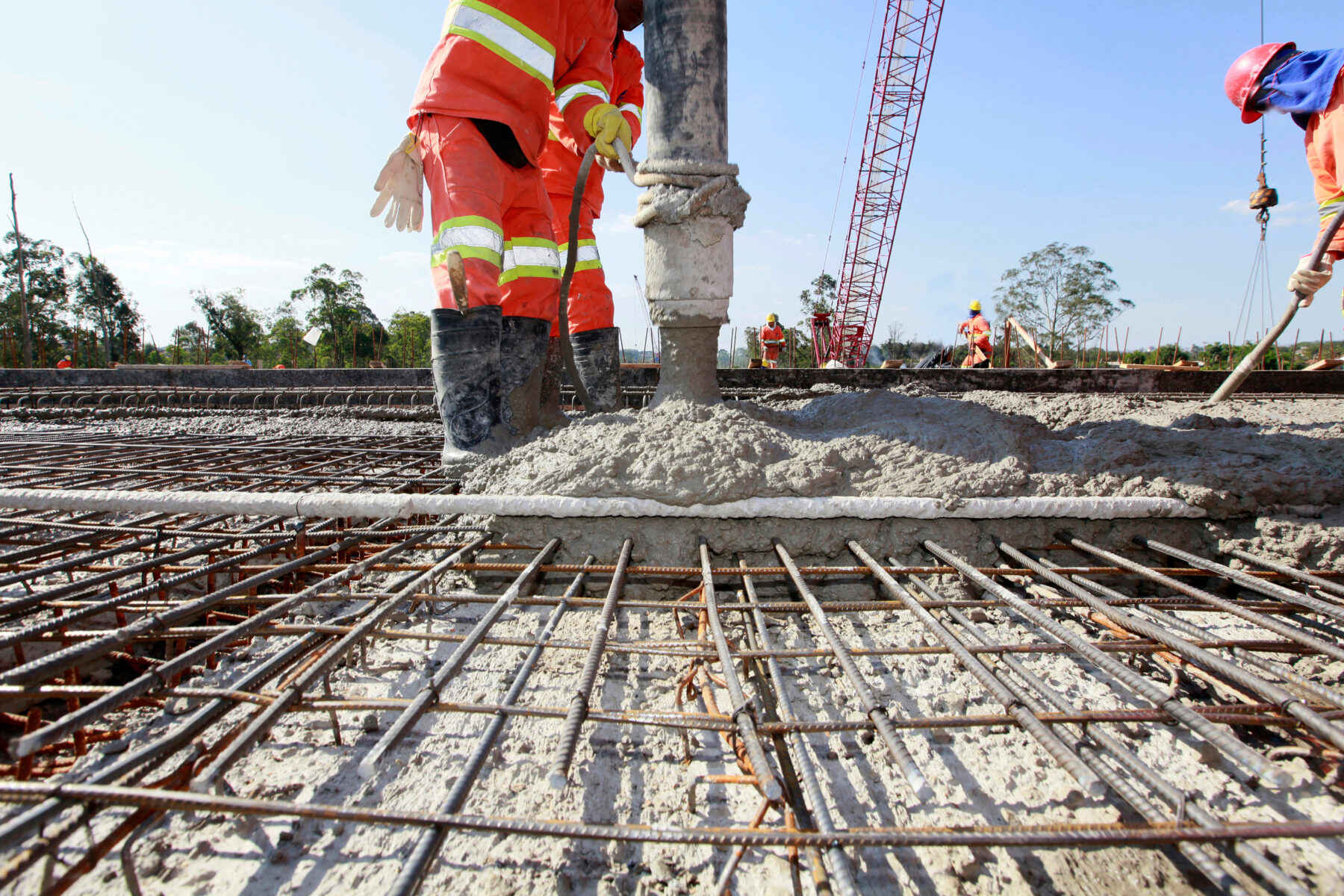
Slump loss under elevated temperatures can reach one inch for every ten-degree increase in concrete temperature, and field crews compensating by adding water inadvertently raise the water-to-cement ratio while reducing internal matrix density. The compaction that looked achievable at the plant becomes a moving target on a job site where midday heat has already begun stiffening the paste. Surface moisture loss compounds this pressure, and plastic shrinkage cracking can appear within the first few hours of placement when evaporation rates outpace bleed water rise.
Heat absorbed by sun-exposed substrates, which can reach 130 degrees Fahrenheit or higher on paved surfaces, transfers directly into fresh concrete from below and compounds the effect of ambient air temperature. Flatwork placed over recently paved or dark-colored surfaces carries elevated risk, because the thermal load from both directions reduces the margin before initial set in ways that air temperature readings alone do not reflect. Substrate temperature measurement before placement is as operationally significant as the ambient forecast.
Admixtures: Managing Set Time and Workability
Set-retarding admixtures work by chemically slowing the hydration reaction, recovering the placement time that elevated temperatures would otherwise subtract from the window. High-range water reducers and superplasticizers restore and maintain workability at the design water-to-cement ratio, without requiring additional mix water to compensate for stiffening. Ready mix concrete formulated with a temperature-responsive admixture package can hold workability from truck discharge through final finishing, even when ambient conditions shift between the morning pour and the afternoon.
Rather than defaulting to maximum chemical retardation for every summer pour, matching the admixture type and dosage to the actual temperature exposure window produces cleaner set timing and a more predictable finishing surface. Mid-range water reducers address moderate heat conditions where a high-range formulation would create excessive delay, and the right selection depends on the temperature window the pour will experience from discharge through finishing. A concrete supplier with deep mix design knowledge builds these adjustments in before the truck leaves the plant, not as corrections made after workability has already dropped.
Supplementary Materials and Mix Structure
Fly ash and slag cement reduce the heat of hydration by replacing a portion of Portland cement content, and both materials extend the set window naturally rather than through chemical intervention alone. Fly ash at fifteen to twenty-five percent substitution can lower peak internal temperature during early curing, while slag cement produces a denser hardened matrix through continued secondary hydration, a characteristic well-suited to structures subject to sustained thermal loading. Used together or independently, these supplementary cementitious materials change what the paste is doing thermally from the inside out.
Angular, well-graded aggregate reduces total paste volume and the shrinkage potential that comes with it, which is why aggregate specification often goes hand in hand with admixture selection for demanding summer placements. Fiber-reinforced concrete addresses thermal crack initiation directly, as the fiber matrix distributes tensile load across forming crack points before the slab has reached adequate bond strength. Lightweight concrete formulations bring their own thermal buffering, where pre-wetted aggregate helps moderate paste temperature at the interface level and reduces the overall heat load carried by the mix.
Temperature Control at the Plant
Concrete discharge temperature, ideally kept below 90 degrees Fahrenheit at the point of delivery, is where plant-level controls have the most direct impact on what arrives at the site. Chilling the mix water or substituting a portion with ice lowers delivery temperature without altering paste chemistry or aggregate structure. Pre-cooling aggregate stockpiles extends that effect through the batch cycle, particularly on large pours where high truck volume and a hot yard would otherwise allow temperature to climb between loads.
Temperature control and admixture selection work as a coordinated system, not isolated decisions made separately. A low discharge temperature buys time at the site, a well-matched retarder package preserves the placement window, and a lower water-to-cementitious-materials ratio holds structural capacity through the full curing cycle. Each lever matters independently, but the combination is what makes a summer pour manageable from first discharge to final set.
Curing in the Heat
After placement, summer curing demands more active management than cooler-season protocols allow. White-pigmented curing compounds reflect solar radiation from the slab surface and slow the moisture evaporation that would otherwise leave the paste undersaturated during the critical first seven days. Wet-burlap curing covered with polyethylene sheeting maintains continuous surface moisture, particularly in low-humidity conditions where evaporation rates exceed what the mix chemistry can naturally compensate for.
Slab surfaces exposed to hot, dry conditions and pronounced overnight temperature swings face compounding stress during early curing. Initial crack-control joint cutting timed earlier than standard scheduling, combined with an extended active curing window, reduces the likelihood of uncontrolled cracking in the finished slab. Both adjustments are built into the mix and project specification before placement begins, not retrofitted after the surface shows distress.
Hot weather concrete is a manageable challenge when mix design, admixture selection, and curing are treated as a coordinated system rather than independent decisions made at different points in the project. Working with a supplier that batches temperature-responsive mixes and brings local knowledge of site conditions, seasonal patterns, and project demands to the table connects the right mix to the right pour. Northgate Ready Mix supplies ready mix concrete solutions across Northern California with the mix design depth and regional experience to support placements across all seasonal conditions. Reach out to the team to explore mix design options built for California’s summer conditions.