

What Is Flowable Fill and When Is It a Better Choice Than Compacted Fill?
November 1, 2026
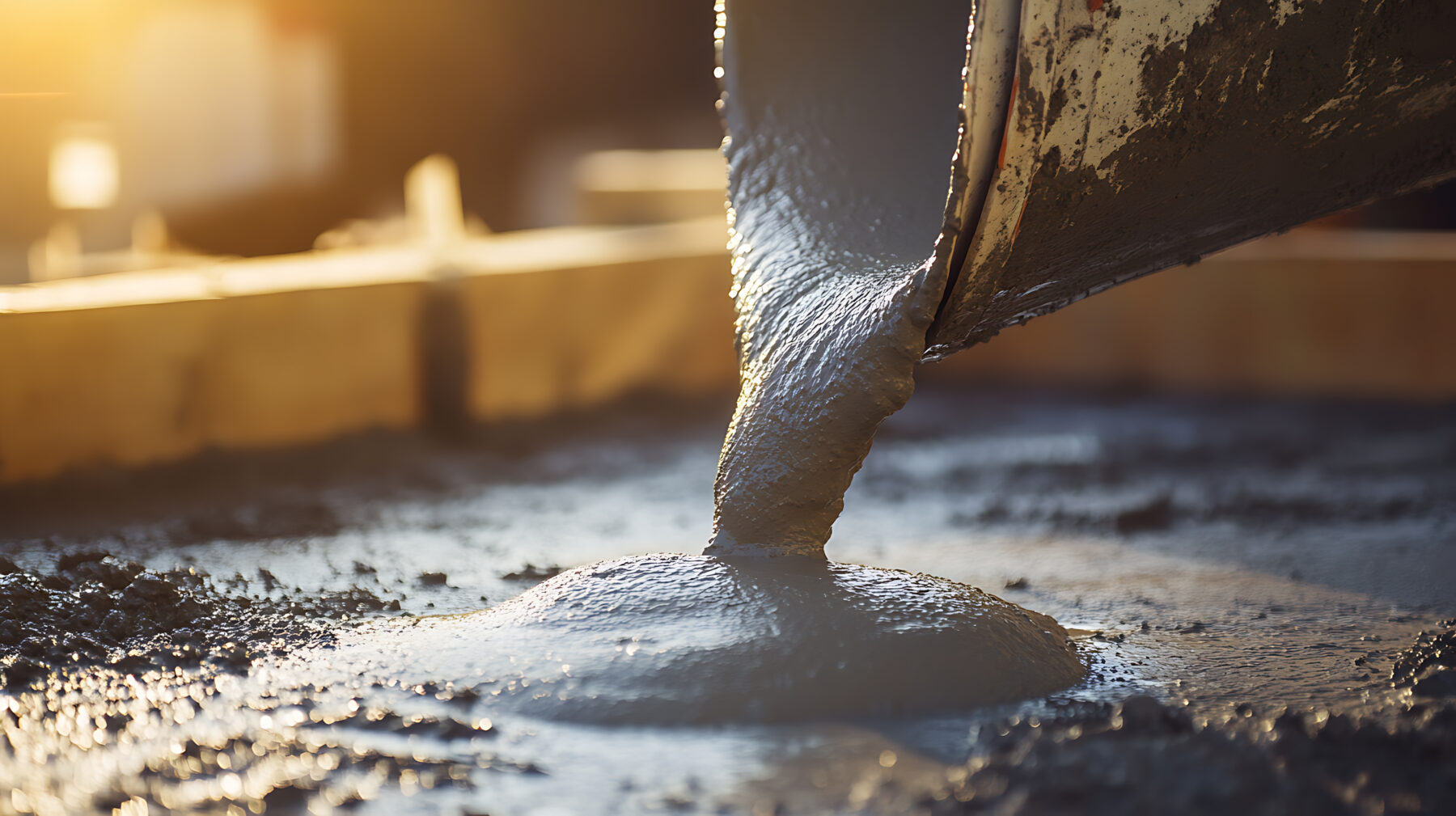
Flowable fill is a pourable, cement-based backfill that flows into place and hardens without the layer-by-layer compaction used for soil or aggregate fill. Compacted fill reaches the same goal of supporting pavement, slabs, and utilities, but it gets there through placed and mechanically compacted lifts. The better choice depends on trench width, soil moisture, access for equipment, and how quickly the area needs to return to service.
What Goes Into Flowable Fill?
Flowable fill is a lean blend of cement, water, sand, and often fly ash, mixed loose enough to level itself without vibration or tamping. The American Concrete Institute classifies it as controlled low-strength material, or CLSM, and crews also know it as trench slurry, controlled density fill, or lean-mix backfill. Most mixes land well under 300 psi, a small fraction of what a structural pour reaches.
That low ceiling is deliberate. A typical driveway mix runs around 3,500 psi because it takes wheel loads and surface wear directly, while flowable fill only needs to match the bearing capacity of well-compacted soil. Mixes in the 50 to 100 psi range sit close to that mark, firm enough to support a pavement section and soft enough to remove later.
Flowable Fill in Narrow Trenches
In trenches too narrow for a compactor to work properly, flowable fill has its clearest edge over compacted fill. Compacted backfill goes in as a series of thin lifts, each packed and often density-tested before the next one goes down, and a plate or rammer needs room on both sides of a pipe to reach the soil packed under its lower curve. A fluid mix runs under and around the pipe on its own, closing those gaps without anyone climbing down into the excavation.
Self-leveling placement also means a trench can be dug narrower from the start, which cuts the volume of spoil hauled off and the fill brought back in. Around a water or sewer line, a trench slurry mix beds the pipe along its full length, so the line rests on continuous support instead of on a few well-packed spots.
Does Flowable Fill Work in Wet Ground?
A trench holding some standing water can still take flowable fill, since the heavier mix pushes the water up and out as it fills the cut. Compacted fill is far more sensitive to moisture, because soil only reaches its target density within a narrow band of water content. After a stretch of winter rain, excavated clay can stay too wet to pack for days, and crews either wait for it to dry or import drier material.
Wet soil causes a second delay at the testing stage. A compacted lift that fails its density check has to be dried, reworked, and tested again before backfill can continue, while flowable fill consolidates under its own weight and skips lift-by-lift testing entirely.
How Fast Can Flowable Fill Carry Traffic?
Flowable fill can typically support traffic within several hours of placement, depending on the mix and the weather, which makes it a common pick for utility cuts in an active street or driveway. Crews often confirm readiness with a ball drop test, where a weighted ball dropped on the surface should leave a dent under about three inches across before paving goes over it.
Compacted fill reaches its working density as each lift is packed, so a well-run backfill can also be paved quickly. The difference shows up in the following months. Soil packed short of its target density beside a pipe tends to settle under repeated wheel loads and leave a dip in the patch, while flowable fill hardens as one solid mass with no voids left to close.
Can Flowable Fill Be Dug Out Later?
Future excavation through flowable fill stays practical as long as the mix is held to a low psi, which matters anywhere a utility line may need repairs or a new connection. Mixes kept below roughly 200 psi can generally be dug with a backhoe, and mixes near 50 psi can come out with hand tools. Heavy amounts of coarse aggregate make the material harder to dig, so excavatable blends lean on sand and fly ash instead.
A flowable fill mix keeps hardening for weeks after the pour, so the excavatable limit is set on its late-age psi rather than an early reading. A blend that seems soft at seven days can still end up harder than planned if its cement content runs high, which is why the target belongs in the order from the start.
When Compacted Fill Makes More Sense
Compacted fill is usually the more economical option across wide, open ground where a roller can work freely, such as a building pad or a parking lot subgrade. A well-graded aggregate like recycled base rock packs into a tight, interlocked layer at a lower material cost per yard than a cement-based fill, and on a large footprint that gap grows quickly.
Weight and fluid pressure favor compacted fill in some spots as well. Flowable fill typically weighs 115 to 145 pounds per cubic foot, heavier than most compacted fills, and it presses hard against a basement wall or form until it sets. Lightweight pipe and buried tanks can float out of position in the fluid mix unless they are anchored or the fill goes in as shallow lifts.
Flowable fill makes sense when trenches are narrow, moisture complicates compaction, or the work needs to move quickly. Compacted fill remains a practical, economical choice for larger areas where equipment has room to operate. The right material depends on site conditions, cost, and whether future excavation is likely.
Northgate Ready Mix offers trench slurry tailored to project requirements, including strength targets for pavement support and future excavation. Contact Northgate Ready Mix to discuss the right mix for your next backfill project.