
5 Questions to Ask Before Ordering Ready-Mix Concrete for Your Next Project
August 1, 2026
Ready-mix concrete orders involve more variables than volume and delivery time. Mix design, supplier capacity, certifications and site management all shape the quality of the finished pour. Asking the right questions before placing an order leads to better outcomes on the job site, from the first truck to the final finish.
Covering the right ground before the order is placed keeps a pour on track from start to finish.
- What Mix Design Does the Project Actually Need?
Concrete is not a single product. The mix design changes based on load, exposure and the type of structure being built. A driveway, a foundation footing and a commercial slab each call for a different recipe.
Mix design comes down to a few key factors:
- Compressive strength, measured in psi, which sets how much load the concrete can carry.
- Water-to-cement ratio, which controls both strength and durability.
- Aggregate size, which affects workability and finish.
- Admixtures, which adjust curing time, workability or weather resistance.
Getting the mix wrong at the order stage creates problems that no amount of finishing can fix later. That is why precision at the batch plant matters. Digital scales that measure aggregates, cementitious materials and admixtures keep every batch true to the spec, which is critical for projects held to strict mix designs.
Before placing an order, confirm the required psi and any special conditions the concrete will face. A supplier familiar with regional building requirements can match the mix to the demands of the pour.
- How Much Concrete Does the Pour Require?
Ordering too little stops a pour mid-project and creates a cold joint where fresh concrete meets partially set material. Ordering too much wastes money and leaves excess to dispose of. Accurate volume math protects the budget and the pour.
Volume comes down to length times width times depth, converted into cubic yards. A quick reference:
- Measure the area in feet.
- Multiply length by width by depth in feet.
- Divide the total by 27 to convert cubic feet into cubic yards.
Always add a small allowance, usually 5 to 10 percent, to cover spillage, uneven subgrade and slight over-excavation. For large or complex pours, a supplier can help verify the estimate before the trucks are scheduled.
- Can the Supplier Deliver On Time and On Spec?
Timing separates a clean pour from a stressful one. Concrete begins to set the moment it leaves the plant, so delivery windows are not flexible suggestions. Late trucks or gaps between loads lead to cold joints and inconsistent finishes.
Two factors decide whether a supplier can hold a schedule:
Fleet size and readiness. A larger fleet keeps loads flowing without long gaps. A supplier running 30 or more modern mixer trucks across the North Bay has the capacity to keep a continuous pour supplied, even on bigger jobs.
Batch plant capacity. Multiple automated batch plants mean production keeps pace with demand. Two plants working in tandem reduce the risk of a stalled pour when a project needs volume fast.
Modern fleets also carry telematics systems that help drivers deliver concrete within specification. That technology tracks each load and supports on-time, on-spec delivery from the plant to the placement point.
- Is the Supplier Properly Certified?
Certifications are not paperwork for its own sake. They signal that a supplier meets recognized standards for quality, consistency and testing.
Two certifications carry real weight in California:
- Caltrans 109 certification confirms the supplier meets state transportation standards for concrete used in public and infrastructure work. It matters for any project that touches roads, bridges or public specifications.
- NRMCA certification from the National Ready Mixed Concrete Association verifies that the plant, equipment and quality controls meet national benchmarks.
A supplier holding both certifications brings a documented commitment to consistent, spec-accurate concrete. For projects where inspections and code compliance are non-negotiable, that verification saves time and reduces risk.
- What Happens to Washout and Site Cleanliness?
Concrete washout is often an afterthought until it becomes a problem. Rinsing out a mixer chute produces highly alkaline slurry that can damage soil, storm drains and landscaping if handled poorly. Many jurisdictions in California enforce strict rules on how washout is managed.
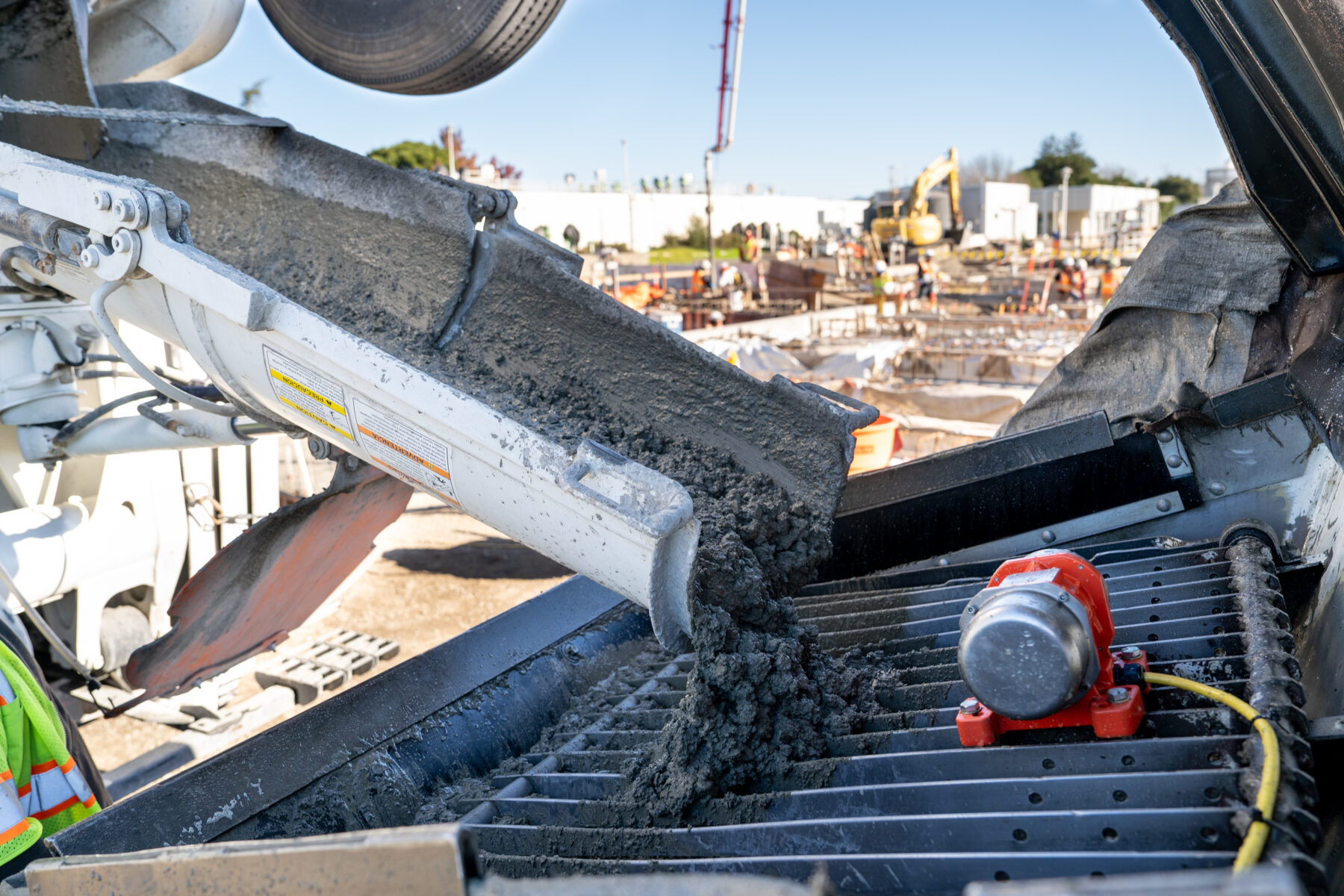
An on-board washout system keeps the process contained on the truck rather than on the ground. That approach protects the job site, keeps the pour area clean and helps a project stay compliant with local environmental requirements. Asking about washout ahead of time avoids surprises and keeps the site in good standing.
Why These Questions Matter for North Bay Projects
The North Bay presents its own mix of conditions, from seasonal rainfall to varied soil types and a wide range of residential and commercial work. Concrete ordered for the region has to account for those realities.
Working with a local supplier shortens haul distances, which keeps concrete fresh and within its workable window. Local knowledge also means the mix, timing and delivery plan reflect the way projects run across the area. A certified supplier with a modern fleet and multiple batch plants brings both the standards and the capacity that North Bay projects demand.
Frequently Asked Questions
How far in advance should ready-mix concrete be ordered?
Most suppliers ask for at least 24 to 48 hours of notice for standard orders, and more for large or specialized pours. Scheduling early secures a delivery window and gives the supplier time to prepare the correct mix design.
What does psi mean in a concrete order?
Psi stands for pounds per square inch, the measure of compressive strength. A higher psi rating means the concrete can carry more load. Residential slabs often call for 2,500 to 3,500 psi, while structural and commercial work may require 4,000 psi or more.
How is the amount of concrete needed calculated?
Multiply the length, width and depth of the pour in feet, then divide by 27 to convert cubic feet into cubic yards. Adding a 5 to 10 percent allowance covers spillage and uneven ground so the pour does not run short.
Why do concrete certifications like Caltrans 109 and NRMCA matter?
These certifications confirm that a supplier meets recognized standards for quality control, testing and consistency. Caltrans 109 applies to state transportation and infrastructure work, while NRMCA verifies national benchmarks for plants and equipment. Both reduce risk on inspected or code-driven projects.
What is an on-board washout system and why is it useful?
An on-board washout system contains concrete rinse water on the truck instead of releasing it onto the ground. It protects soil and storm drains, keeps the job site clean and helps projects meet local environmental rules.